


Today a new set of Pau Ferro bridge pins arrived in the post. They’re for Éala — a Guild Jumbo Junior Reserve Maple with a dry, rhythmic, short‑sustain voice that sits in the mix, tight bass, honest mids, musical trebles, and a natural groove‑engine feel for trad rhythm and alternating‑bass fingerpicking. And before I even fit them, it felt worth sharing a quick thought…
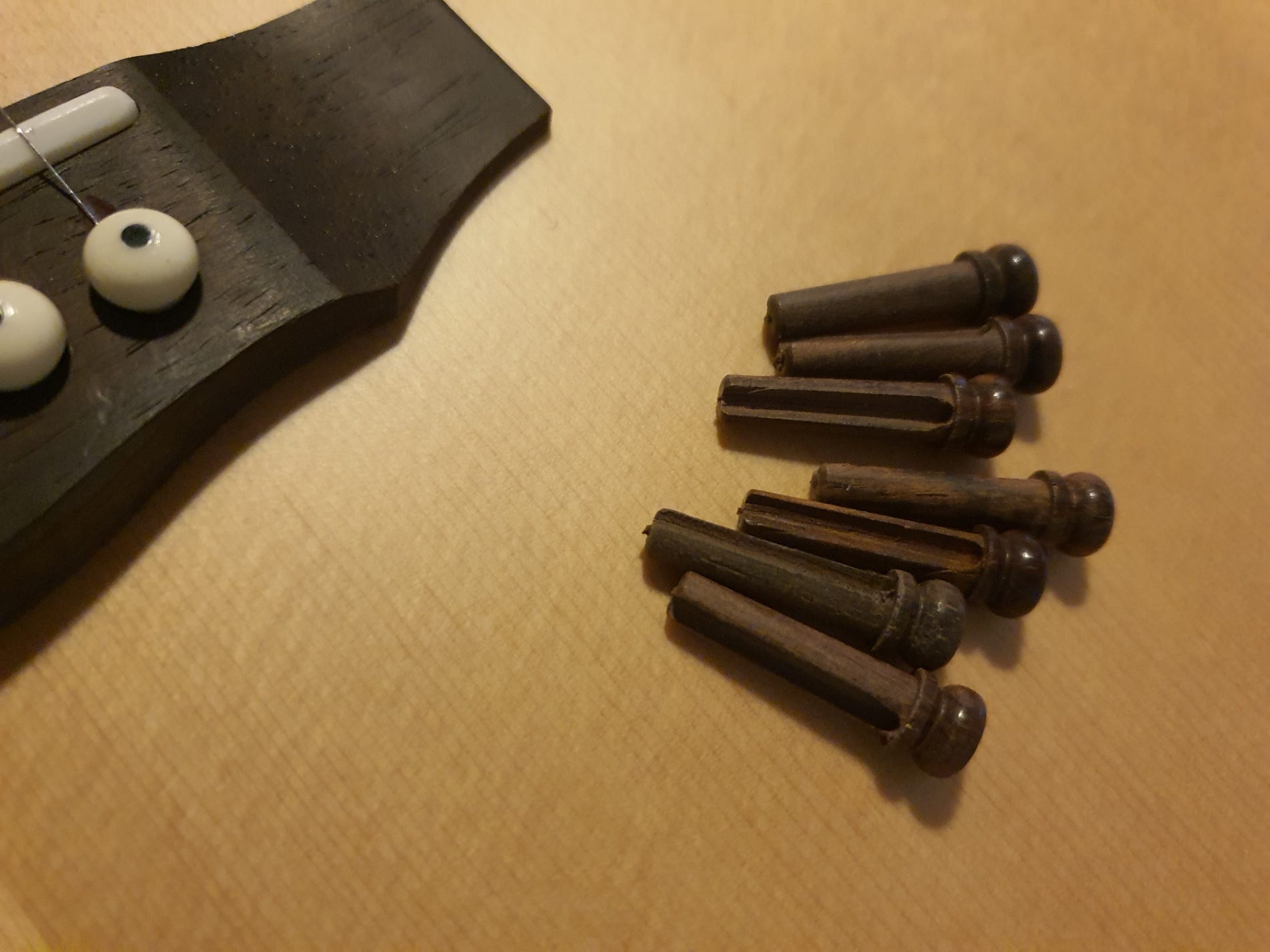
Bridge pins are one of those tiny components that somehow attract outsized debate. Some players insist they change the whole feel of a guitar; others say they’re basically along for the ride.
Pau Ferro is a dense, stable hardwood, and in theory that extra mass and stiffness can shift how energy moves from the strings into the top. Coming from basic plastic pins, the usual expectation is a slightly firmer attack, a touch more clarity, and maybe a bit more focus in the low end. Nothing dramatic — more like tightening the picture rather than changing the voice.
Whether that’s physics, perception, or a mix of both is a conversation for another day. For now, I just like the idea of matching a Pau Ferro bridge with Pau Ferro pins and seeing what happens under the hands.
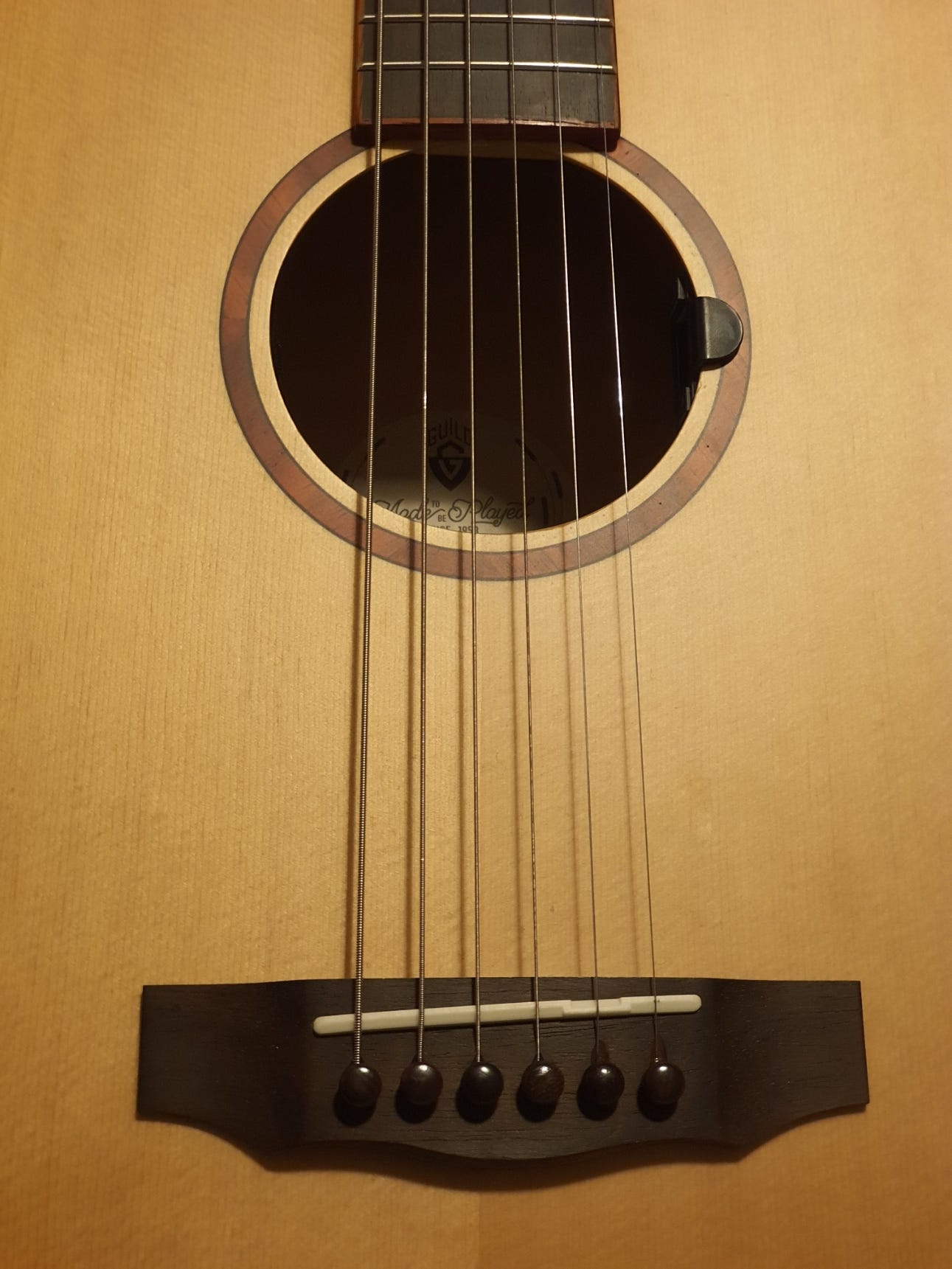
First Impressions After Fitting the Pins
Before changing the pins, I played a few pieces that really expose Éala’s voice — Coffee Blues, Stagolee, and M&O Blues— all on my usual NB1254 custom set. That set is already part of her signature feel, so it gave me a consistent baseline to hear what the pins were actually doing.. And these tunes are perfect for hearing how the trebles behave and how the bass sits in the pocket. Then I played them again, same chair, same spot, same touch.
With the original plastic pins, I’ve always liked the sparkle in the trebles, but there was also a kind of “shaking a bag of nails” quality right at the very top — as if the highest harmonics were slightly jangled, not quite in agreement with each other. A bit of air, a bit of chaos.
With the Pau Ferro pins, some of that air has gone, but what’s left feels calmer. The trebles are rounder and a little more bell‑like. They’re not as forward as before, but they’re easier to listen to. The whole guitar feels less tiring — more like an old valve radio and less like an old transistor. Subtle, but noticeable.
For anyone curious, I picked these up from Small Wonder Music in Sussex, England — lovely people, quick delivery, and a great selection of pins in different woods.
More to come once they’ve settled and are played in.