


I woke to the cry of whatchadoin, whatchadoin, whatchadoin - a red‑whiskered bulbul outside my window. That’s how Mauritius says good morning. Twenty‑seven degrees at 7am, soft air drifting through the shutters, and the reminder that I’ve come a long way: a minimum of twelve hours in economy, a body that’s still somewhere over Istanbul, and hands that haven’t quite arrived yet.
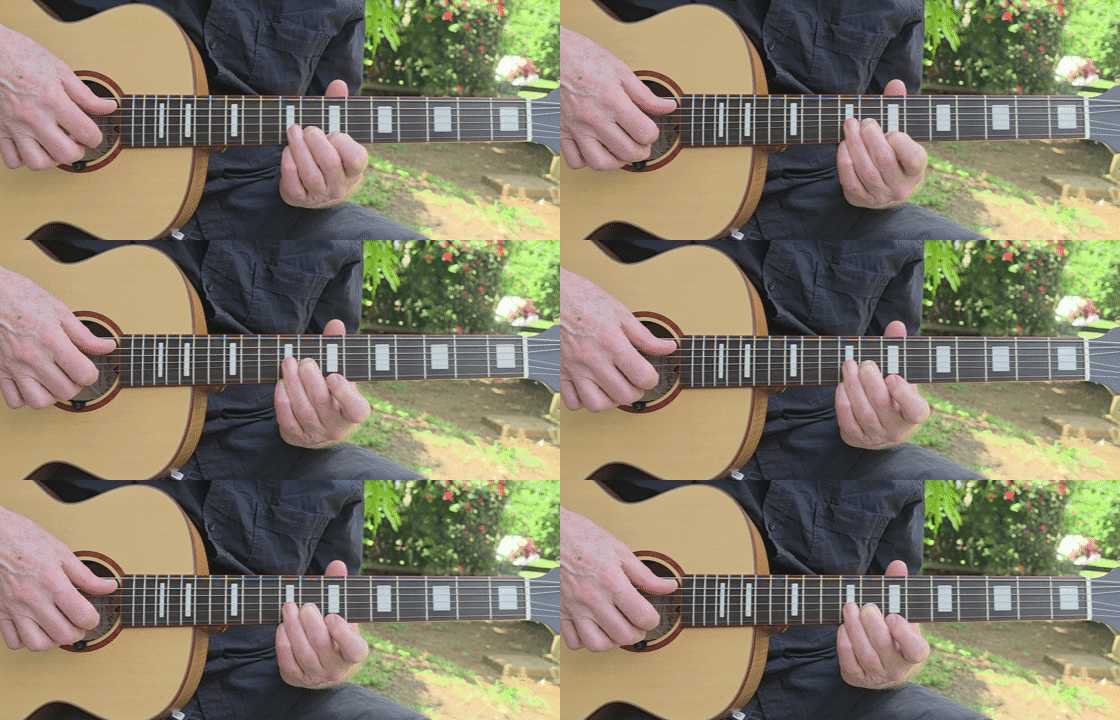
I knew something was wrong the second I picked up the guitar. Just lifting it, with my left hand closing around the neck, told me the shape of my own hand had changed. Forming that first C chord - a shape that needs no thought - suddenly felt stiff, resistant, deliberate. I switched to a piece in G that lives in the first three frets, the one where my hand normally walks calmly across the strings. And even there, the alternating bass felt clumsy, as if I were wearing an oven glove. The nuance, the lightness, the tiny adjustments that make the pattern breathe - all of it was dulled. It’s the strange reality of long‑haul travel: your hands arrive a day later than you do, and until they catch up, the guitar reminds you that technique lives in the body as much as in the mind.
There’s always a moment, after a long flight, when the body reminds you it hasn’t quite arrived yet. You step into the heat, into the different light, into the softness of the air, and everything feels welcoming - but the hands lag behind. They hold on to the flight, the pressure changes, the stillness, the dry cabin air. You sleep, you drink water, you wake up in a new place, but the hands are still carrying yesterday. And as a guitarist you feel that delay more sharply than anything else. Before you’ve played a note, you know the climate has rewritten the way your fingers meet the strings. It’s a strange kind of jet lag: Not in the head, but in the touch.
And the heat adds its own layer. In a warm, humid climate the blood vessels open up, the body tries to cool itself, and fluid drifts into the hands and feet. It’s a quiet, persistent swelling - nothing dramatic, just enough to thicken the fingertips and slow the small movements. People arriving from cooler places feel it more sharply, and musicians feel it most of all. Even after the flight has worn off, the climate keeps its hand on you. Some mornings the fingers are a little puffy, a little slow, as if the air itself has weight. You learn to play with it, to warm up differently, to let the day’s temperature decide how the guitar will feel under your hands.
And yet, even as I sit here typing, the stiffness is already easing. An early walk along the beach has the blood moving again, the warmth loosening everything, the simple act of swinging my arms and pumping my hands helping the fluid shift. I know this pattern well enough now that I travel with two short‑scale guitars - a small concession to the reality that my hands arrive a day later than I do. One is deeply resonant, the other more reflective, and there’s a small irony in how they behave in this heat: the reflective one feels more intimate and responsive under the fingers, almost a little breathless, while the lush, resonant guitar can feel like too much until the hands have fully arrived. The shorter reach and gentler tension of both guitars give the fingers a little grace while they’re still waking up. And every so often I’ll pick up a guitar with a wider nut, like my Furch Pioneer, because the extra space between the strings can feel like a relief. It’s one of the reasons that guitar works so well for me as a travel companion: it meets my hands where they are, not where they are on a cool morning in Ireland.
And when the hands finally begin to return, the guitar tells you before anything else does. There’s a moment - sometimes after a walk, sometimes after the heat has settled into you, rather than pressed against you - when a single note rings clean again. The fingertip finds the string without hesitation, the thumb lands where it should, and the instrument feels like itself. Or rather: it feels like you again. The Mauritian air changes the sound in its own way - the warmth softens the attack, the humidity rounds the edges, the whole instrument feels a little more relaxed. It’s part of the quiet pleasure of playing in a new place: the climate gets into the wood, the air shapes the tone, and the body slowly tunes itself to the environment. When the hands finally catch up, the guitar opens, and you realise you’ve arrived twice - once at the airport, and once in your own touch.
A simple routine my medics recommend for helping hands and feet settle in the heat
Long‑haul travel and warm, humid climates can leave the hands and feet holding on to more fluid than usual. The two things my medical team suggested are simple, gentle, and easy to weave into the day.
🖐 Hand‑pump exercise
• Make a fist and hold it for four seconds.
• Open the hand fully, stretching the fingers wide, and hold for four seconds.
• Repeat this five times.
• Do the whole cycle several times throughout the day.
It’s small, quiet work - but it wakes up the muscle pump in the forearm and helps the hands feel lighter.
🌊 Cooling the feet and ankles
• Take an early morning walk with your feet and ankles in the sea or lagoon, when the water is at its coolest.
• In the evening, if the pool has cooled, dangle your feet in the water for a few minutes before bed.
• Wear a hat, loose clothing, and sandals during the day so the body can shed heat rather than hold it.
None of this is dramatic, but it’s enough to help the body settle into the climate and to keep the hands and feet from feeling heavy.