

Being human means being social, and being social means culture -the shared patterns we build together, from language, to art, to music. Through travel I’ve encountered an astonishing variety of musical forms and ways of listening. And travel has taught me this: that beneath that fruitful explosion of diversity, we all share the same raw machinery of hearing. For everyone who hears music, it doesn’t matter where we were born or what musical language we sing: - we respond in the same way to certain moments in sound. There is a quiet inevitability to it. And even before we can name it, there is one such moment that almost every ear will recognise.
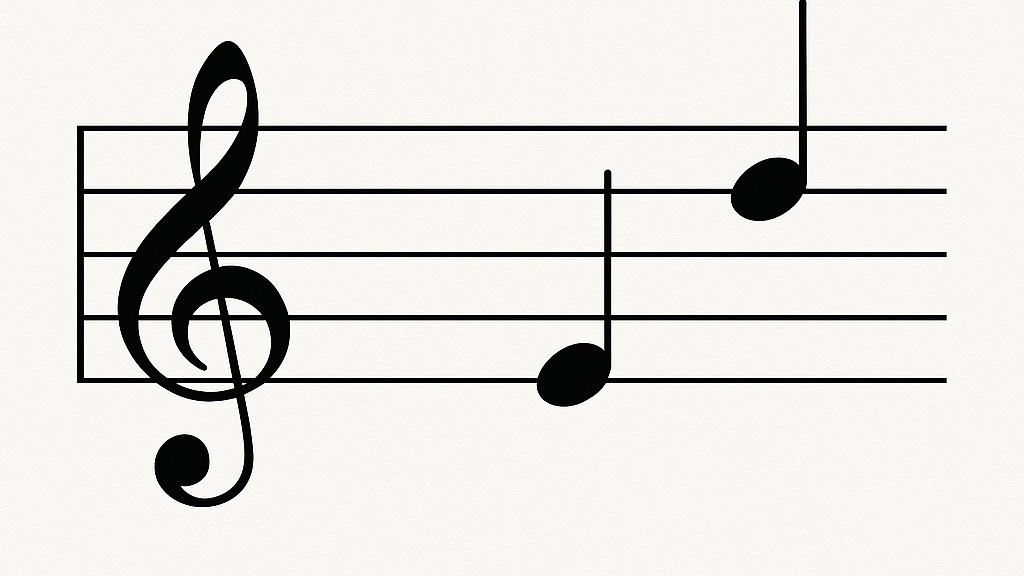
That moment is the octave. The simplest relationship in sound, and somehow the most mysterious: One tone rising into another that feels both different and deeply connected. We meet it long before we understand it, and it becomes one of the quiet foundations of how we hear.
What makes the octave so powerful is its simplicity. When one vibration moves at exactly twice the speed of another, the ear settles. The sound locks in. Even without training, even without a musical vocabulary, most of us sense that these two tones belong to the same family. They’re not identical - one is clearly higher - but they carry a shared identity, as if they were two versions of the same thought.
People have noticed this for a very long time. The Greeks certainly did. Pythagoras made his discoveries working with a single string stretched over a wooden box. He plucked the string and it gave him a note. Then he found that if he cut the length of the string in half, it didn’t give him a new note at all. It gave him a higher echo of the note he already had. That simple observation - a length of string, and a string half that length - became the seed from which Western music systems grew.
Once you accept the octave as a kind of foundation - a frame that captures the way we hear music - everything else follows. The chromatic scale becomes a way of dividing that frame into steps. Diatonic scales let you organise those steps into moods and colours, giving shape to melody. Chords become the vertical structures we build inside the frame. Instruments are built around it. The guitar’s fretboard is literally a map of how we’ve chosen to carve up the space between one octave and the next. Every fret, every interval, every chord shape you know is a decision about how to live inside that frame.
So, the octave isn’t just another interval. It’s the boundary of the world we build our music in. And once you see it - once you feel how simple and how inevitable it is - the whole landscape of the guitar starts to make a different kind of sense.
Part 2 - Enigma Made Easy comes next week.
If today’s chapter leaves you curious or wanting a little more breathing room, you’re welcome to join the conversation in the Story of Music Reader’s Room →